Introduction
The Irish Paleo Forum is a collective organisation of researchers in the Palaeo academic fields, based on the island of Ireland. This website details our members and their research institutions and broad areas of study. The group was established in January 2024.
The group meets once a year as part of an additional day (or part thereof) associated with established research meetings (IGRM and the Irish Ecological Association meeting in alternate years).
Members
Burren and Cliffs of Moher UNESCO Global Geopark
| Name | Image | Position Title | Research Interests | Research Page | ||
|---|---|---|---|---|---|---|
| Eamon Doyle |  | Geologist for the Burren and Cliffs of Moher UNESCO Global Geopark | Carboniferous invertebrate and vertebrate fossils and trace fossils | Research Page | Burren and Cliffs of Moher UNESCO Global Geopark | Doyle |
Dublin City University
Photo: Kyran O’Brien/DCU Communications
| Name | Image | Position Title | Research Interests | Research Page | ||
|---|---|---|---|---|---|---|
| Róisín Dignam |  | Research Assistant, School of Chemical Sciences | My research fields of interest are Paleoclimatology and astrobiology. I plan to start a PhD in paleoclimatology in 2025 in DCU. | Research Page | Dublin City University | Dignam |
| Valentina Foresta |  | PhD Researcher, School of Chemical Sciences | Prebiotic Chemistry and microfossils. My research if focus on prebiotic chemistry and proto-biosignatures and how to recognize them and discern biomorphs from microfossils. | Research Page | Dublin City University | Foresta |
| Louise Gillet de Chalonge |  | PhD Researcher, School of Chemical Sciences | Origin of life, Microfossils, Archaean Earth, Artificial fossilisation, Biosignatures | Research Page | Dublin City University | Gillet de Chalonge |
| Devyani Jambhule |  | PhD researcher, School of Chemical Sciences | Geobiology, Astrobiology, Origins of life | Research Page | Dublin City University | Jambhule |
| Seán Jordan |  | Associate Professor of Biogeochemistry and Astrobiology, School of Chemical Sciences | Seán Jordan is PI of ProtoSigns Lab in DCU, focused on investigating the origin, evolution, and existence of life on Earth and throughout our Solar System. His research incorporates aspects of prebiotic chemistry, palaeontology, and palaeoclimatology to understand past life and environments and to develop tools for biosignature detection. | Research Page | Dublin City University | Jordan |
National Museum of Ireland
| Name | Image | Position Title | Research Interests | Research Page | ||
|---|---|---|---|---|---|---|
| Nigel T. Monaghan |  | Research Associate | Irish Quaternary vertebrates; history of Irish palaeontology; history of Irish museums | Research Page | National Museum of Ireland | Monaghan |
| Aodhán Ó Gogáin |  | Documentation Officer, Registration Department | Interested in Upper Palaeozoic fish and tetrapod taxonomy, evolution, and palaeoecology. My work involves using computed tomography for 3D fossil renderings and employing geochemistry and sedimentology to reconstruct past environments and their fauna. I am particularly interested in the Jarrow fossil site. | Research Page | National Museum of Ireland | Ó Gogáin |
National Museums NI
| Name | Image | Position Title | Research Interests | Research Page | ||
|---|---|---|---|---|---|---|
| Mike Simms |  | Curator of Geology, Natural Sciences | Lower Jurassic stratigraphy, ammonites, echinoderms and brachiopods; The Carnian Pluvial Episode (co-discoverer); with especial interest in Triassic caves and the age of their contained faunas; Pleistocene caves, their speleogenesis and contained sediments/fauna; Meteorites and impact structures/deposits; Landscape evolution, especially in Ireland; Anything else I stumble across that looks interesting. | Research Page | National Museums NI | Simms |
Technological University Dublin
| Name | Image | Position Title | Research Interests | Research Page | ||
|---|---|---|---|---|---|---|
| Shane O'Reilly |  | Lecturer in Analytical Chemistry, Chemical & BioPharmaceutical Sciences | Organic geochemistry, lipids, palaeoenvironmental change, molecular taphonomy, mass spectrometry | Research Page | Technological University Dublin | O'Reilly |
Trinity College Dublin
| Name | Image | Position Title | Research Interests | Research Page | ||
|---|---|---|---|---|---|---|
| Catarina Barbosa |  | PhD Researcher, School of Natural Sciences, Department of Botany | Catarina is currently focusing on chemometrics, plant functional traits, and how they interact with broader earth systems processes in the Mesozoic; but she’s hoping to return to the golden years of the Late Paleozoic soon enough! | Research Page | Trinity College Dublin | Barbosa |
| Emma Dunne |  | Assistant Professor, School of Natural Sciences | I am a quantitative palaeobiologist and my research aims to understand how environmental, geological, and economic factors have shaped Earth's biodiversity through deep-time, with a focus on terrestrial vertebrates such as early tetrapods, lissamphibians, dinosaurs, pterosaurs, and other reptiles. | Research Page | Trinity College Dublin | Dunne |
| Thibault Durieux |  | PhD Researcher, School of Natural Sciences, Department of Botany | Anatomically preserved Devonian-Carboniferous woody plants (about 360 to 300 million years ago) from France and Ireland; Wood-degrading organisms from this time period (especially fungi). | Research Page | Trinity College Dublin | Durieux |
| Una Farrell | 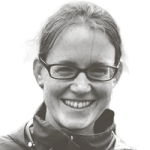 | Data Manager | Currently managing a diversity of geological data including a) global sedimentary geochemical data, broadly used to investigate environmental change throughout Earth history b) Irish geological heritage data, linking building stones/quarries/heritage sites. Previous experience with museum collections, and a background in invertebrate palaeontology and taphonomy. | Research Page | Trinity College Dublin | Farrell |
| Carla J. Harper |  | Assistant Professor of Environmental Science, School of Natural Sciences, Department of Botany | Research interests include the biology and ecology of microorganisms and biotas in the late Palaeozoic of Europe, especially the Devonian and Carboniferous floras of Ireland; symbiotic systems through time, as well as the biology, and evolution of fossil microbes (with an emphasis on morphology, interactions, interrelatedness, and nutritional modes).d taphonomy. | Research Page | Trinity College Dublin | Harper |
| Emma Blanka Kovács |  | Postdoctoral Research Fellow, School of Natural Sciences, Department of Botany | Blanka is interested in past climate change events and the biospheric response to changes in palaeoatmospheric conditions. Her postgraduate research focused on Early Jurassic hyperthermal events. Currently, she is working on the Irish Lower Carboniferous stratigraphy, as well as observing plant-soil interactions for different evolutionary groups. | Research Page | Trinity College Dublin | Kovács |
| Antonietta Barbara Knetge |  | PhD Researcher, School of Natural Sciences, Department of Botany | Currently researching plant palaeoecology , palaeodiversity, and taphonomy at the end-Triassic biotic crisis of Greenland. Interested in Mesozoic fossil plant functional traits, plant fossil chemistry, and their relationship with palaeoenvironmental conditions and fossil preservation. | Research Page | Trinity College Dublin | Knetge |
| William J. Matthaeus |  | Postdoctoral Research Fellow, School of Natural Sciences, Department of Botany | William is working to advance the mechanistic representation of ecosystems and evolution in mathematical and simulation models. His recent research has focused on the co-development of plant functional traits from fossil material and ecosystem model processes to evaluate plant function and vegetation-climate interactions across geologic time. | Research Page | Trinity College Dublin | Matthaeus |
| Jennifer McElwain |  | Professor of Botany, School of Natural Sciences, Department of Botany | Palaeobotany, palaeoclimates, palaeoatmospheres, Triassic-Jurassic mass extinction events, reconstructing carbon dioxide levels using fossil plant proxies | Research Page | Trinity College Dublin | McElwain |
| Amanda Perera |  | PhD Researcher, School of Natural Sciences, Department of Geology | Sedimentology, Paleoclimatology, Cylostratigraphy | Research Page | Trinity College Dublin | Perera |
| Micha Ruhl | 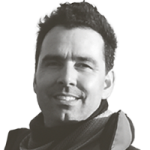 | Associate Professor in Sedimentology, Stratigraphy, and Palaeoclimatology, School of Natural Sciences, Department of Geology | I study Earth system processes, with a particular focus on the causes and consequences of climatic and environmental change during global mass extinctions and major large igneous province emplacement in the geological past. My research is commonly conducted through international research initiatives, such as the International Continental Drilling Program (ICDP). | Research Page | Trinity College Dublin | Ruhl |
| Matthias Sinnesael |  | Assistant Professor in Palaeoenvironments, School of Natural Sciences, Department of Geology | Palaeoclimatology, Stratigraphy | Research Page | Trinity College Dublin | Sinnesael |
| Patrick N. Wyse Jackson |  | Professor in Geology and Curator of the Geological Museum, School of Natural Sciences, Department of Geology | Patrick Wyse Jackson’s research focuses on the taxonomy, functional morphology and paleobiology of Paleozoic bryozoans. He is currently working on various aspects of some fossil bryozoan faunas from Ireland and the US, and on the revision of the Order Fenestrata for the forthcoming edition of the Treatise on Invertebrate Paleontology. | Research Page | Trinity College Dublin | Wyse Jackson |
University College Cork
| Name | Image | Position Title | Research Interests | Research Page | ||
|---|---|---|---|---|---|---|
| Heda Agic |  | Lecturer, School of Biological, Earth and Environmental Sciences | Precambrian palaeontology, eukaryote evolution, multicellularity, geobiology, stratigraphy, carbon isotopes | Research Page | University College Cork | Agic |
| Marcos Amores |  | PhD Student, School of Biological, Earth & Environmental Sciences | Palaeoclimatology, stable carbon geochemistry, geochronology, palaeobotany and palynology.. | Research Page | University College Cork | Amores |
| Hollie Bean |  | PhD Researcher, School of Biological, Earth & Environmental Sciences | Taphonomy, geochemistry, experimental palaeobiology, melanin | Research Page | University College Cork | Bean |
| Daniel Cirtina |  | PhD Researcher, School of Biological, Earth & Environmental Sciences | Melanin pigments, ichthyology, Carboniferous vertebrates, evolutionary developmental biology, geochemistry, ocular evolution. | Research Page | University College Cork | Cirtina |
| Daniel Falk | 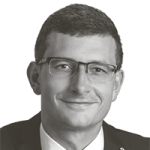 | PhD Student, School of Biological, Earth & Environmental Sciences | I currently investigate the taphonomy of the Eocene Geiseltal Konservat-Lagerstätte (Germany). I am also organiser of an annual trace fossil excavation in central Germany to investigate Permian ecosystems. I have a strong interests in stratigraphy and sedimentology, but also museology and public outreach. | Research Page | University College Cork | Falk |
| Chris Mays | 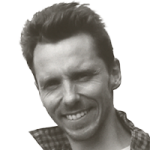 | Lecturer in Palaeontology, School of Biological, Earth & Environmental Sciences | Mass Extinctions, Palynology, Palaeobotany, Palaeoecology, Botany, Biostratigraphy, Palaeoclimatology, Sedimentary Geology, Terrestrial Ecology, Sedimentary Geochemistry, Computed Tomography, Neutron Tomography, Chemostratigraphy, Lithostratigraphy, Amber Palaeontology, Chemotaxonomy | Research Page | University College Cork | Mays |
| Prof. Maria McNamara |  | Professor of Palaeontology, School of Biological, Earth & Environmental Sciences | I am an analytical palaeobiologist and specialise in the analysis of the ultrastructure and geochemistry of fossil soft tissues. I run a major research programme on the evolution and fossil record of melanin and keratin. My fossil work is ground-truthed in a rigorous programme of controlled laboratory-based taphonomic experiments. | Research Page | University College Cork | McNamara |
| Valentina Rossi |  | PostDoc Researcher, School of Biological, Earth & Environmental Sciences | I am a palaeontologist, skilled in the analysis of pigmented soft tissues in vertebrates using experimental taphonomy, Raman spectroscopy and synchrotron-based chemical analyses. I am currently interested in the stability of melanin molecules in the fossil record and how their preservation may impact our interpretation of fossilised pigmented tissues.eriments. | Research Page | University College Cork | Rossi |
| Tiffany Shea Slater |  | Postdoctoral Researcher, School of Biological, Earth & Environmental Sciences | I am a palaeobiologist interested in the preservation of ancient biomolecules. I use an experimental approach to investigate whether different biomolecules, such as pigments and proteins, can survive fossilisation and which chemical techniques are appropriate for their detection (e.g., Raman, FTIR and XANES spectroscopy, immunohistochemistry, etc.). | Research Page | University College Cork | Slater |
| Panagiotis D. Sianis |  | Research Assistant, School of Biological, Earth & Environmental Sciences | I am a Palaeontologist (PhD) specialising in the study of European large mammal assemblages during the Early Pleistocene (Villlafranchian), including taxonomy, taphonomy and palaeoecology. I am also experienced in archaeological palaeoanthropology. Currently I am part of the Ireland’s Fossil Heritage programme which focuses on science communication. | Research Page | University College Cork | Sianis |
| Aidan Sweeney |  | Research Assistant, School of Biological, Earth & Environmental Sciences | Marine invertebrate morphology through time | Research Page | University College Cork | Sweeney |
| Holly-Anne Turner |  | PhD Researcher, School of Biological, Earth and Environmental Sciences | Triassic palaeobotany and palaeoecology | Research Page | University College Cork | Turner |
University College Dublin
| Name | Image | Position Title | Research Interests | Research Page | ||
|---|---|---|---|---|---|---|
| Weimu Xu |  | Assistant Professor, School of Earth Sciences | Deep-time palaeoclimatology (e.g. Mesozoic Oceanic Anoxic Events and Mass Extinctions, and the Cenozoic hyperthermal events), global carbon cycle, enhanced silicate weathering. | Research Page | University College Dublin | Xu |
University of Galway
| Name | Image | Position Title | Research Interests | Research Page | ||
|---|---|---|---|---|---|---|
| Karen Bacon |  | Lecturer, Natural Sciences | Plant Ecology, Palaeoecology, Palaeobotany, Extinction, Taphonomy | Research Page | University of Galway | Bacon |
| Orla Banting |  | MSc Researcher, Botany, School of Natural Sciences | Leaf traits, genome size, and extinction risk. | Research Page | University of Galway | Banting |
| Sandro Muller |  | PhD Researcher, Botany, School of Natural Sciences | My main interest lies within the mutual relationships between leaf traits, environmental factors (such as climate or soil characteristics), and preservation potential | Research Page | University of Galway | Muller |
| Emily Roberts |  | Post Doctoral Researcher, Botany, School of Natural Sciences | Palaeobotany, amber, exudates, extinction risk | Research Page | University of Galway | Roberts |